Dual Language Learners (DLLs) are children, ages birth to five, whose first language is a language other than English or who are developing two or more languages, one of which may be English. This diverse group of young learners represents a wide range of races, ethnicities, cultures, home languages, socioeconomic statuses, and countries of origin. Making up nearly 60% of children birth to age 5 in California, they must be prioritized within the state’s Early Learning and Care system.
Significant progress has been made recently in shifting narratives and policies in our state to uplift and embrace the benefits of bilingualism and supports for bilingual children. In 2016, Proposition 58, the California Education for a Global Economy Initiative, overturned nearly 20 years of English-only instruction in public schools, embracing bilingualism as a valuable asset. Additional policies such as Global California 2030, the California English Learner (EL) Roadmap, and the Master Plan for Early Learning and Care, declare biliteracy as a state goal and strongly promote multilingual learning opportunities. In addition, Early Edge and partners have successfully advocated for budget investments and legislation to better support DLL children in Early Learning and Care settings.
However, there’s much more to be done to fully support and unlock the potential of DLL children. The first five years of a child’s life are particularly crucial for their health, learning, and future success. Research shows that a strong foundation in the home language not only enhances English learning but also fosters proficiency in both languages. California’s Early Learning and Care system must prioritize their cultural and linguistic strengths, expand bilingual programs, and the bilingual educator workforce to promote the overall development of DLL children.

When DLL children lack the support they need, they miss the opportunity to fully harness the cognitive, academic, and social benefits of multilingualism, limiting their language development, learning, and long-term academic success.

When DLL families aren’t meaningfully engaged, children lose vital connection between home and school, hindering their language development, cultural identity, and the foundation for their academic success.

Current federal attacks on immigrant communities are creating fear and instability for many families and increased student absences. With 65% of DLL children having at least one foreign-born parent these activities have the potential to hinder these young learners’ opportunities to develop in healthy, supportive environments.
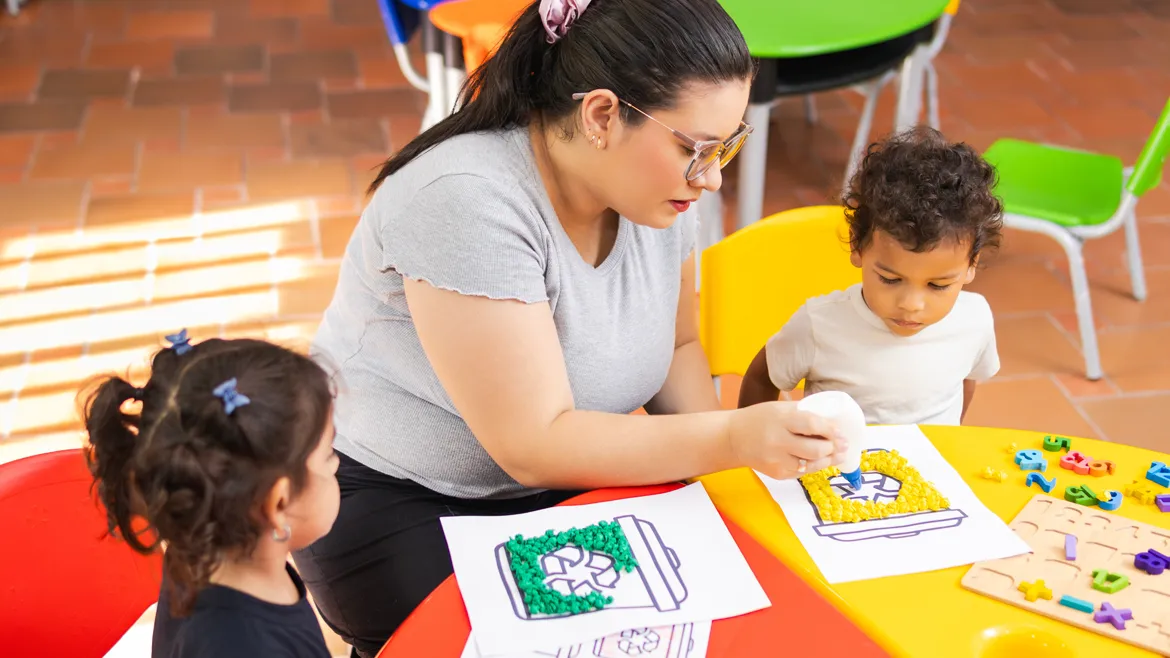
When educators and providers lack the training and resources to support DLLs, children miss critical opportunities to nurture their language acquisition, cultural assets, and overall learning potential.
California’s multilingual children are supported in early language development of their home language and English, and all children in our state have the opportunity to reap the benefits that come from speaking more than one language.
Our state must prioritize the cultural and linguistic strengths of California’s DLLs by affirming bilingualism and the home languages of all children. Here are the priority actions we’re currently advocating for to make this a reality:
Black Language–also known as African American Vernacular or Ebonics–is a rule-governed language with deep roots in Black communities across the United States. Supporting and honoring children’s home languages, including Black Language, supports their overall academic success. We must therefore affirm and celebrate Black Language as an asset that enriches children’s linguistics repertoire and cultural development.
In collaboration with CDE and CDSS, provide the field with clear guidance, aligned resources, and ongoing technical assistance to support effective and consistent implementation across programs. In addition, ensure DLL identification data is included in the Cradle-to-Career (C2C) data system.This data is critical for understanding program participation, measuring outcomes, and ensuring resources are effectively targeted to support DLLs across programs.
Although 94% of families with multilingual children value bilingualism for their children, access to bilingual and dual-language programs remains limited in many communities. Expanding these programs supports the developmental benefits of bilingualism and honors children’s home languages, and aligns with the goals of the state’s English Learner Roadmap. In addition, the state must advance the bilingual specialization within the Child Development Permit to create a more prepared, diverse, and responsive workforce. Embracing and fostering California’s diversity demonstrates that, despite the federal push for English-only policies, we will remain a leader in fostering and celebrating our linguistic diversity.
Learn more about all our policy priorities in our 2026 policy agenda.
California Bill AB 1363 (Asm. Rivas)
Preschool: dual language learners. AB 1363 has been signed by Governor Newsom! Read our full statement to learn more about this historic decision to…
California Bill AB 393 (Rivas)
Childcare: dual language learners. AB 393 has been signed by Governor Newsom! Read our statement to learn more about this historic decision to expand…
California Bill AB 2268 (Muratsuchi)
English learners: initial identification: English language proficiency assessment. AB 2268 has been was signed by Governor Gavin Newsom on Friday, June 14th. The bill…
We successfully advocated for the following investments in California’s state budget:
Publications and Materials
Webinars and Videos
Help us achieve change for young multilingual learners by taking the following steps:
Every contribution–whether it’s time, talent, or financial support–makes a difference. Donate below or learn about other ways to give.
Stay connected! Sign up for the Early Edge California newsletter.
Sign up©2026 Early Edge California. All rights reserved. Privacy Policy