Early Edge Blog
In Practice: How LAUSD Schools Are Sustaining Multilingual Success
April 16, 2026
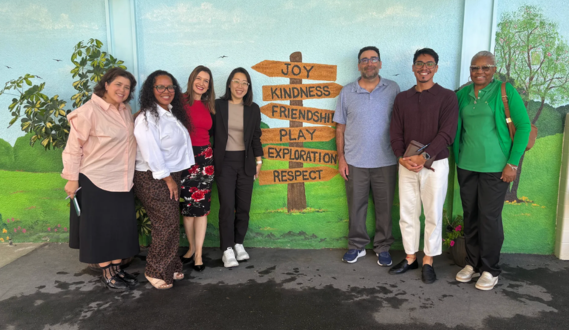
On November 7, Californians Together, Catalyst California, and Early Edge California co-hosted the Dual Language Learner (DLL) Master Plan Advocates for a site visit to Los Angeles Unified School District (LAUSD) to observe dual language immersion (DLI) and early learning programs in action. Partners included members from Black ECE, Ed-Trust West, First 5 Los Angeles, Multilingual Promise, PEACH, and UNITE-LA.
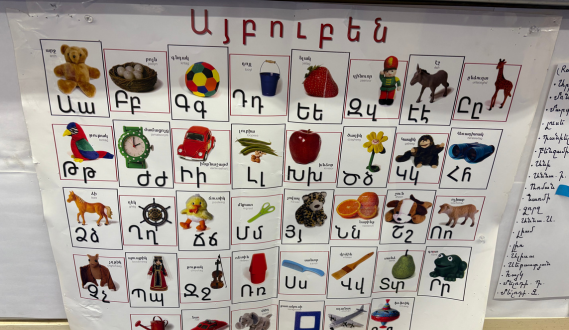
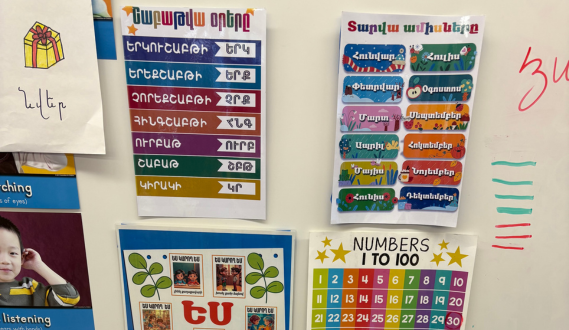
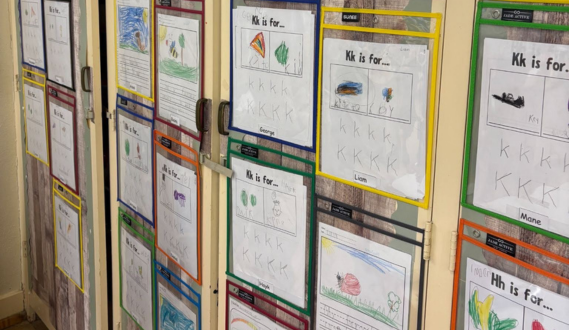
The visit began at Pinewood Avenue Early Education Center (EEC), a full-day preschool program serving eligible children ages two through five through a 50/50 DLI model, with instruction split between Armenian and English. Before the classroom walkthrough, attendees heard from Principal Ani Nicholas and parents, who emphasized the scarcity of public Armenian language programs and materials, referring to Pinewood as a “one of a kind” resource. Families also shared how the program nurtures their children’s bilingual development while deepening their cultural connections, highlighted by parent-painted murals and offering traditional costumes, to strengthen cultural ties. During the tour, partners observed developmentally appropriate, culturally and linguistically affirming instruction aligned with the SEAL model, and engaged with educators on how the program supports young multilingual learners (MLs) and their families.
The group then traveled to Mountain View Elementary for a second round of classroom visits. There, participants observed an Armenian DLI Transitional Kindergarten (TK) Program and a TK Spanish Dual Immersion classroom. The visit provided a valuable opportunity to see how dual language pathways, models in which students learn academic content in two languages, are implemented across grade levels and linguistic communities. Attendees also had the opportunity to discuss directly with the school leaders and educators about program design, instructional practices, and family engagement.
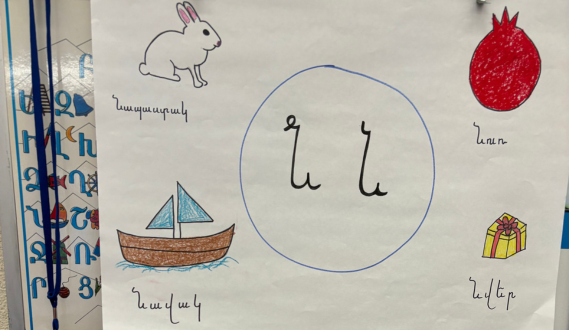
During the visit, partners had the opportunity to meet with Principal Sosie Kralian, who shared insights on how she started the program, advocated for it to continue and has strengthened it over the years with minimal Armenian instructional materials. Together, the group engaged in a meaningful and solutions-focused discussion on program successes and challenges; staff recruitment, retention, and training for TK and dual language educators, transition supports across early learning and elementary programs and strategies to strengthen family engagement and support. Principal Sosie Kralian shared that family engagement is a core value, reflected in parents’ commitment to sustaining the program by contributing Armenian-language materials and resources. An Armenian teacher also highlighted her journey from classroom teacher to coach, emphasizing the strong collaboration and intentional teacher preparation needed to make the program successful. Similarly, Mountain View highlighted the importance and benefits of partnering with local community colleges to recruit educators.
Mountain View leaders emphasized that much of the program’s success is rooted in strong parent and family involvement. Families in the school community understand the importance of maintaining the home language and celebrating students’ cultures, and this shared commitment has been critical to the program’s growth and sustainability. School leaders noted that families’ eagerness to preserve and uplift home languages has created a strong partnership between home and school, enabling the site to more effectively support and sustain high-quality dual language pathways. Participants reflected on how this alignment between families and educators helps reinforce positive cultural identity development, multilingualism, multiculturalism, and long-term student academic success.
Throughout the day, discussions between partners, district staff and educators underscored the importance of strong bilingual teacher pipelines, aligned early learning experiences, and active family engagement in maintaining and expanding high-quality dual language programs. Both schools are examples of the impacts of families recognizing the power of bilingualism.
This firsthand look at Pinewood and Mountain View provided a deeper understanding of how policy translates into the classroom. These insights directly informed our group’s reflection on the Action Plan, reinforcing our commitment to:
- Use funding streams within the state’s mixed‑delivery system to expand dual language immersion programs for MLL children, prioritizing counties with MLL populations above the state average and the languages they speak.
- Invest in and grow the multilingual early childhood workforce by supporting bilingual authorizations for the PK–3 ECE Specialist Instruction Credential and multilingual/bilingual specializations for the Child Development Permit, with data collection to evaluate state program impact on the workforce.
- Support educators by ensuring they have the resources and dedicated planning time needed to develop high-quality materials.
- Invest in the development and adoption of DLI instructional materials that align with the Preschool/Transitional Kindergarten Learning Foundations (PTKLF) in multiple languages, including languages outside the top five spoken in California.
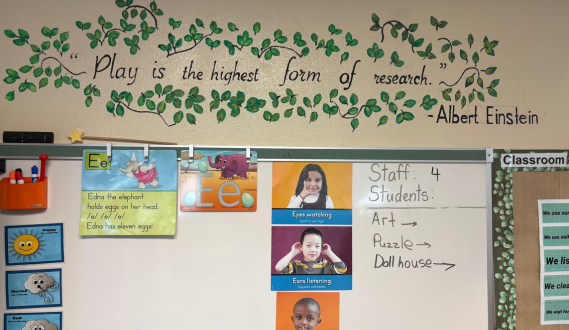
- To strengthen instructional leadership for multilingual learners, invest in building capacity of program‑ and district‑level administrators on developmentally appropriate, play‑based practice, effective support for bilingual educators, and strategic use of funding to provide full‑day multilingual early care.
- Develop family‑centered communications that promote a whole‑child approach, including the benefits of multilingualism, strategies to support children’s home languages, and information on immigrant rights and available supports fostering family partnerships.
Thank you to LAUSD, Pinewood EEC, and Mountain View Elementary staff for hosting and for their continued leadership in advancing equitable, high-quality learning environments for young DLL children.